


A 40-mile commute each way from Zeeland adds up to about 80 miles a day and roughly 20,000 miles a year. At that mileage, the Jeep you choose can mean a difference of well over $1,000 a year in fuel alone.
Whether you're heading up I-196 toward Grand Rapids, out US-31 toward Grand Haven, or across Chicago Drive every morning, you want a Jeep that handles lake-effect snow without draining your wallet at the pump. Here's how the 2026 Jeep lineup compares for high-mileage West Michigan commuters, and what it costs to keep each one on the road.
Quick Answer
The 2026 Jeep Cherokee Hybrid is the most fuel-efficient Jeep you can buy new, with an EPA rating of 37 mpg combined (39 city / 35 highway), standard all-wheel drive and regular fuel. For an 80-mile round trip from Zeeland, it uses about 230 fewer gallons a year than a Jeep Compass and about 400 fewer than a Wrangler. The Compass (26 mpg combined, standard AWD) is the lower-priced runner-up.
Key Takeaways
- The all-new 2026 Cherokee is hybrid-only: a 1.6L turbo four with two electric motors (210 hp), an eCVT and standard AWD
- At about 20,000 miles a year, the Cherokee Hybrid uses roughly 540 gallons of fuel, compared with about 770 for a Compass and 950–1,000 for a Wrangler
- The Compass is the budget choice, with standard AWD on every trim and a starting price around $31,000
- The Grand Cherokee's 2.0L Hurricane 4 Turbo is rated 23 mpg combined, and Jeep's figures are based on premium fuel
- High-mileage commuters will outrun a 3-year/36,000-mile basic warranty in under two years, so plan for maintenance and coverage up front
- Jeep dropped its 4xe plug-in hybrids for 2026, and their roughly 20–25 miles of electric range wouldn't cover an 80-mile round trip anyway
2026 Jeep Fuel Economy Compared for a Zeeland Commute
This table estimates yearly fuel use for an 80-mile round trip, five days a week, 50 weeks a year (about 20,000 miles), using EPA combined ratings. The cost column assumes $3.25 per gallon for easy comparison. Plug in your own local price.
| 2026 Jeep | EPA MPG (City / Hwy / Combined) | Drivetrain | Est. Gallons per Year | Est. Fuel Cost per Year* |
|---|---|---|---|---|
| Cherokee Hybrid | 39 / 35 / 37 | Standard AWD | ~540 | ~$1,760 |
| Compass (2.0L turbo) | 23 / 31 / 26 | Standard AWD | ~770 | ~$2,500 |
| Grand Cherokee (2.0L Hurricane 4) | 21 / 27 / 23 | 4x4 | ~870 | ~$2,830 + premium fuel |
| Grand Cherokee (3.6L V6) | 19 / 26 / 22 | 4x4 | ~910 | ~$2,950 |
| Wrangler 4-Door (2.0L turbo) | 20 / 22 / 21 | 4x4 | ~950 | ~$3,100 |
| Wrangler 4-Door (3.6L V6, auto) | 18 / 23 / 20 | 4x4 | ~1,000 | ~$3,250 |
*Illustrative only, at $3.25/gallon for every vehicle. Jeep's Grand Cherokee Hurricane 4 ratings are based on premium fuel, which raises its real cost. Your mileage will vary with driving style, winter weather, tires and speed.
If most of your commute is highway, such as I-196 into Grand Rapids, pay the most attention to the highway number. The Cherokee Hybrid still leads at 35 mpg highway, with the Compass close behind at 31 mpg. The Cherokee pulls further ahead in stop-and-go traffic, where the hybrid system can drive on electric power at lower speeds.
Best Jeeps for Long Commutes, Ranked
1. Jeep Cherokee Hybrid: Best Overall
The relaunched Cherokee is built for commuters: 37 mpg combined, standard AWD for lake-effect mornings, regular fuel and a starting price around $37,000. It's the clear choice if fuel cost is your top priority. Shop Cherokee inventory.
2. Jeep Compass: Best Value
A 200-hp 2.0L turbo, standard AWD and 31 mpg highway at the lowest price in the Jeep lineup. It's a good fit if a lower purchase price matters more than squeezing out every mpg. Shop Compass inventory.
3. Grand Cherokee: Best for Comfort
If your commute is long and you want a quieter, roomier midsize SUV, the Grand Cherokee is the most comfortable highway cruiser here. The trade-off is roughly 330 more gallons a year than the Cherokee.
4. Wrangler: Fun, Not Frugal
A Wrangler is a blast on weekends, but its boxy shape and off-road hardware make it the thirstiest commuter in the lineup, about 21 mpg combined at best.
Torn between the top two? Our Compass vs. Cherokee commuting comparison goes deeper on price, space and real-world costs.
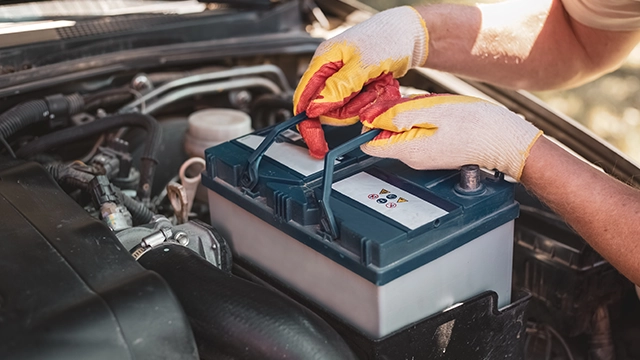
At 20,000 miles a year, routine service comes around often. Our Grand Haven service team keeps commuter Jeeps on schedule.
Keeping Maintenance Costs Down on a High-Mileage Commute
Fuel is only part of the cost. At 20,000 miles a year, you'll hit service intervals about twice as fast as the average driver. Here's how to keep costs predictable:
Plan for warranty coverage early
Jeep's 3-year/36,000-mile basic warranty runs out in less than two years at Zeeland-commuter mileage, while the 5-year/60,000-mile powertrain warranty lasts about three. If you plan to keep the vehicle, ask about extended service contracts and prepaid maintenance before your factory coverage ends. They often cost less when bought early.
Hybrids can save on brakes
The Cherokee Hybrid's regenerative braking uses its electric motors to slow the vehicle, which typically reduces wear on brake pads and rotors, a real savings for drivers in stop-and-go traffic. Ask our service team about the maintenance schedule for hybrid-specific components.
Watch fuel grade
The Cherokee Hybrid runs on regular unleaded. Jeep's fuel economy figures for the Grand Cherokee's Hurricane 4 Turbo are based on premium fuel, which can add a few hundred dollars a year at commuter mileage.
Think twice about leasing
Most leases include 10,000 to 15,000 miles a year. At around 20,000 commuting miles a year, excess-mileage charges can add up quickly, so many Zeeland commuters come out ahead buying, or contracting extra lease miles up front.
Stay on schedule
Book oil changes and tire rotations when the oil-life monitor tells you to, not by the calendar. Check our current service coupons or schedule service online to keep high-mileage costs in check.
Test-Drive the Cherokee Hybrid and Compass
The best way to compare is to drive both on part of your actual route. Preferred Chrysler Dodge Jeep Ram of Grand Haven serves commuters throughout the Holland and Zeeland area, and our team can walk you through fuel costs, warranty coverage and financing for a high-mileage driver.
Visit us at 810 Robbins Road, Grand Haven, MI 49417, or call sales at (616) 207-7973.